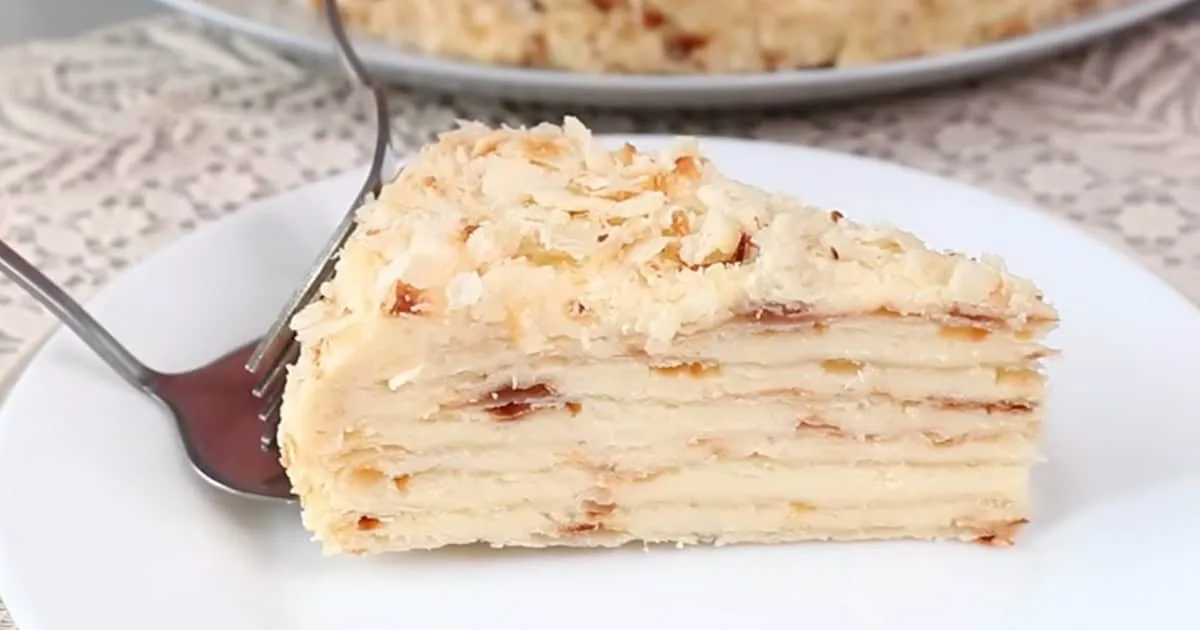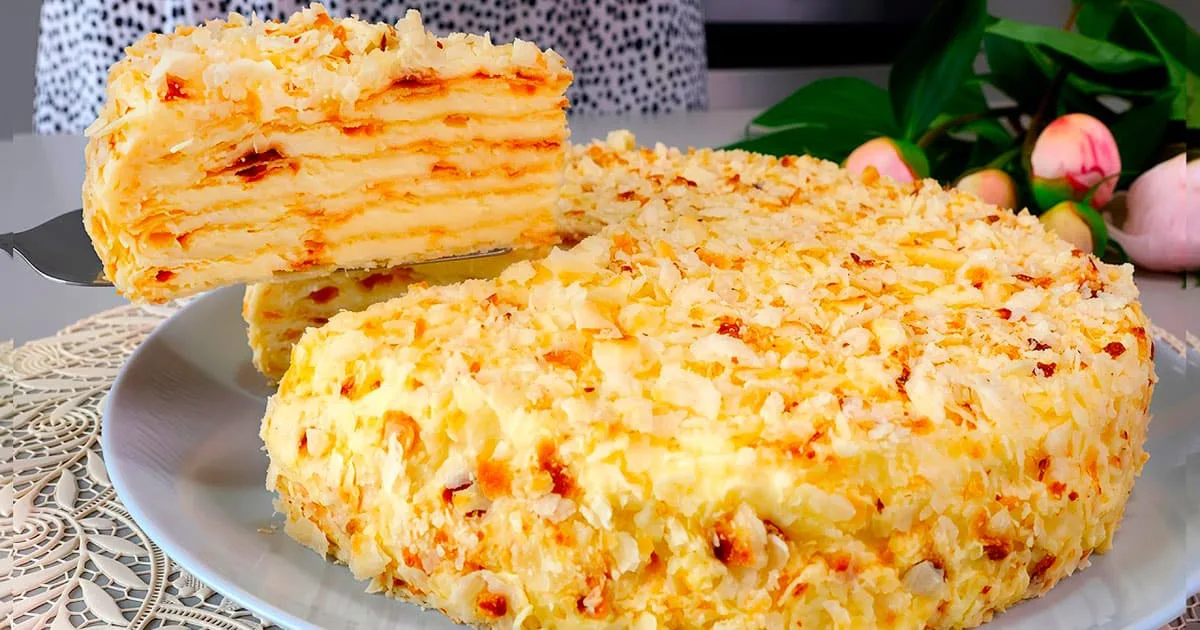
I grew up thinking Napoleon cake was one of those things you only made for special occasions because it took forever and required baking a dozen layers in the oven. Then I saw my mother-in-law make it completely on the stovetop, on a regular skillet, and I could not believe how the layers came out. Crispy, flaky, buttery — exactly like the real thing. I’ve been making it her way ever since and I will never go back.
For the pastry layers:
- 1 to 2 cups all-purpose flour, plus more for dusting
- 1 stick cold unsalted butter (82% fat if you can find it)
- 1 egg
- pinch of salt
- 1 tablespoon white vinegar
- 1 tablespoon vegetable oil
- 5 tablespoons ice cold water
For the pastry cream:
- 2 eggs
- 3/4 cup granulated sugar
- 1/3 cup cornstarch (or all-purpose flour)
- 2 1/2 cups whole milk
- 1/2 teaspoon vanilla extract
- 1 stick unsalted butter, softened to room temperature
Sift the flour into a large bowl, then grate the cold butter straight in on a box grater. Work it quickly with your fingers until the mixture looks like coarse, sandy crumbs. In a small bowl, whisk together the egg, salt, vinegar, oil, and ice cold water, then pour that into the flour mixture. Bring it together just until a dough forms, without kneading it too much. Dust it lightly with flour and divide into 6 pieces, each about the same size.
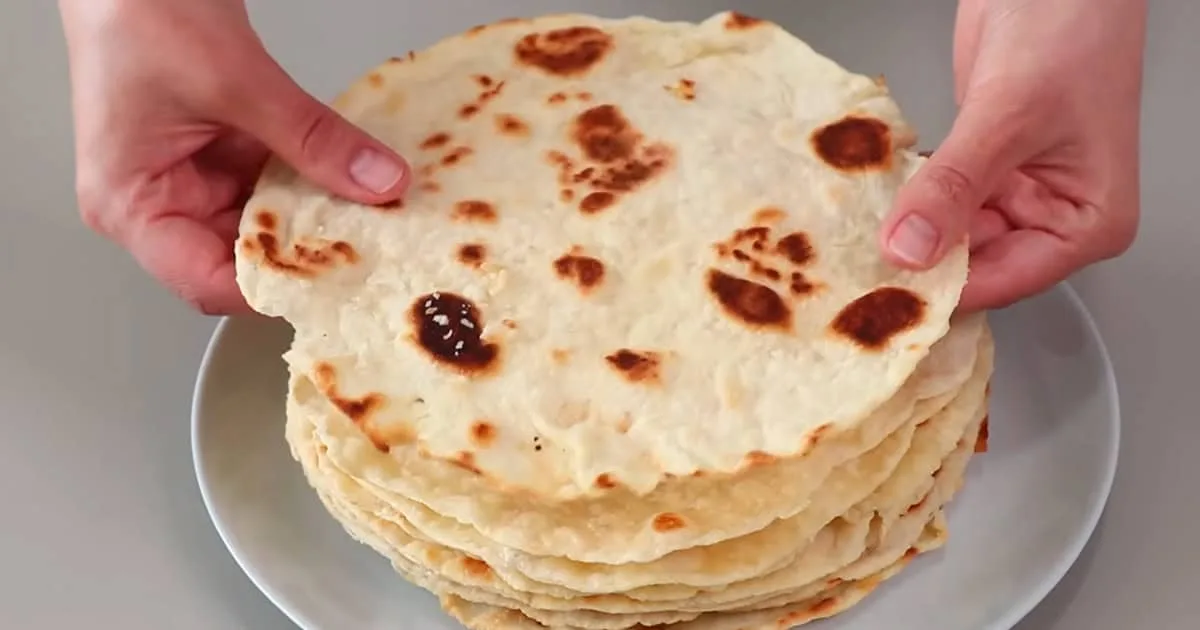
Roll each piece out very thin on a lightly floured surface and cut into a circle about 9 inches across. Cook each layer in a dry preheated skillet over medium heat for 1 to 2 minutes per side with the lid on. They puff slightly and get little golden spots — that’s exactly what you want. Cook the scraps too and save them for crumbling on top later.
For the cream, whisk the eggs, sugar, and cornstarch together in a heavy-bottomed saucepan. Pour in the milk gradually while whisking so there are no lumps. Cook over medium heat, stirring constantly, until the cream thickens and just starts to bubble. Keep stirring for one more minute, then pull it off the heat, stir in the vanilla, and press a sheet of plastic wrap directly onto the surface so a skin doesn’t form. Let it cool completely to room temperature.
Once the custard is fully cooled, beat the softened butter with a hand mixer until it’s pale and fluffy. Add the cooled custard a few spoonfuls at a time, beating well after each addition, until you have a smooth, silky cream.
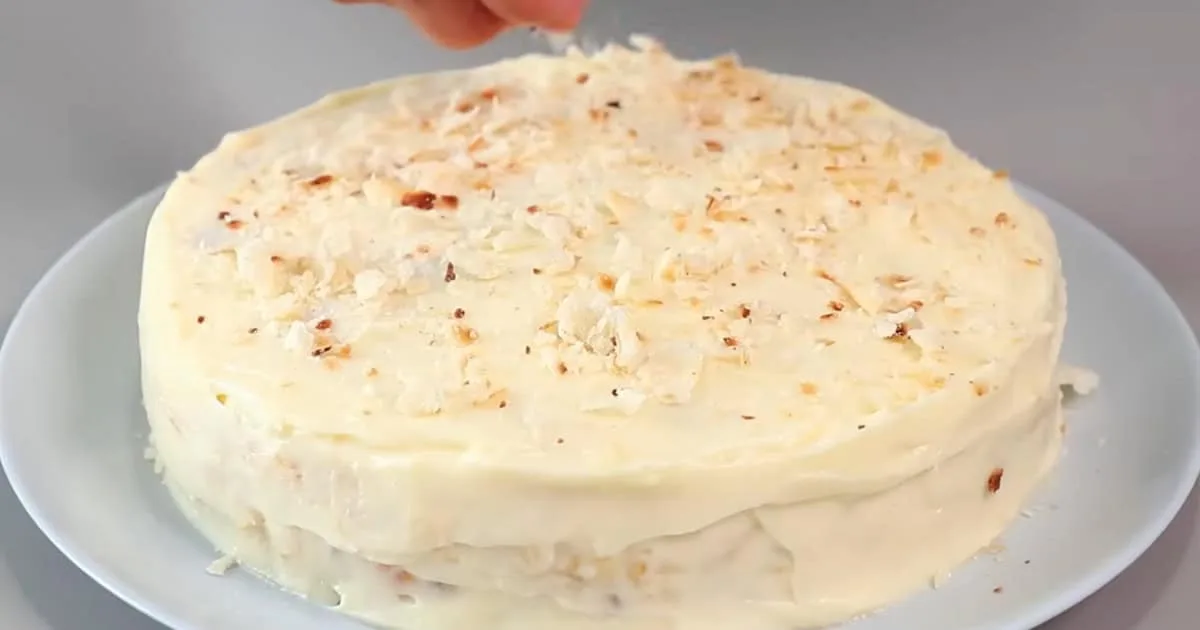
Put a small spoonful of cream on the bottom of your serving plate to keep the first layer from sliding around. Stack the layers with a generous spread of cream between each one, then cover the top and sides too. Crush the baked scraps into fine crumbs and press them all over the outside of the cake.
Refrigerate for at least 5 to 6 hours. Overnight is even better. The layers soak up the cream and soften into something tender and almost custardy, and the whole cake slices perfectly. Every time I make this someone at the table asks for the recipe, and I love telling them it all happened on the stovetop.