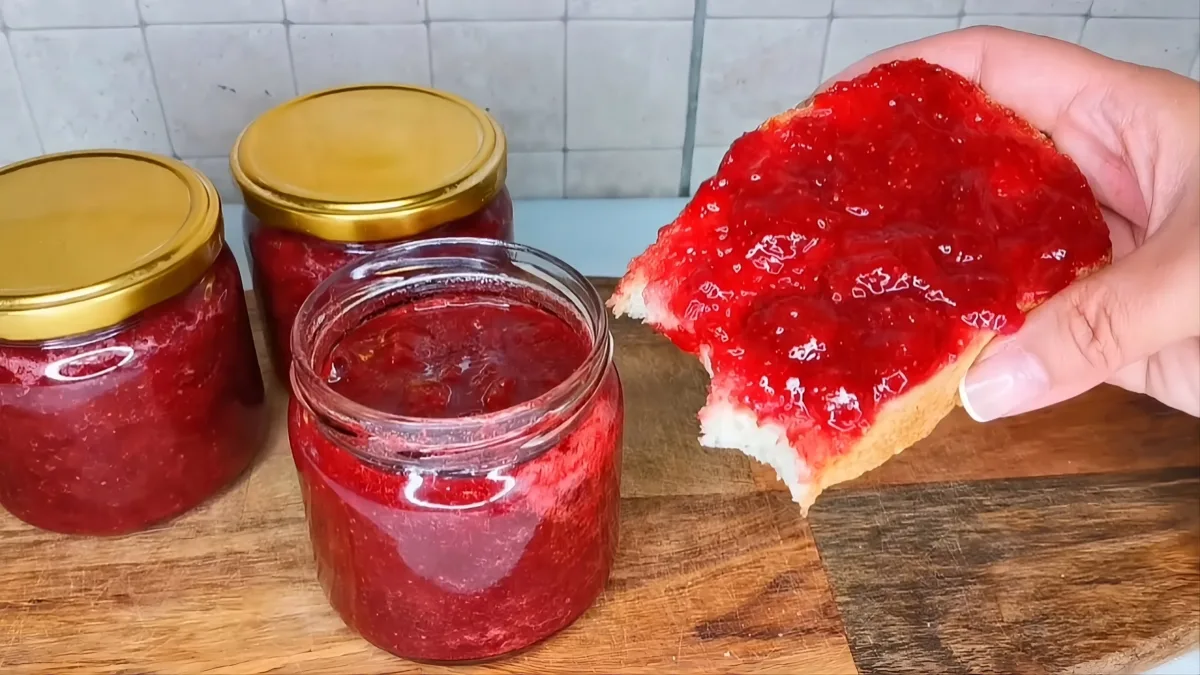
Every June when my strawberry patch goes crazy I make big batches of this jam to last us through winter. Most strawberry jam recipes call for equal parts fruit and sugar, and honestly I always thought that was just how it had to be. Then I started cutting back on the sugar little by little and eventually landed on this ratio. Just under a cup of sugar per pound of berries. The jam still sets up thick and beautiful, the flavor is pure strawberry, and it doesn’t taste like candy.
The secret is cooking it hot and fast and knowing when to stop.
- 2 lbs fresh strawberries, hulled
- 1 cup granulated sugar
- juice of half a lemon
Hull the berries, rinse them well, and let them dry completely before you start. Wet berries add extra water to the pot and make the jam take longer to thicken. Cut them into smaller pieces — I don’t like huge chunks in jam, but leave them rustic enough that you can still see fruit in the finished product.
Toss the cut strawberries into a heavy-bottomed saucepan with the sugar and lemon juice. Stir everything together and let it sit for 20 to 30 minutes at room temperature. The berries will release a good amount of juice and the sugar will start dissolving on its own. This resting step matters — it means you’re not starting with dry sugar in a hot pan, which can burn.
Once the berries have released their juice, set the pan over high heat and bring it to a boil, stirring as you go. Keep it on high heat and stir constantly. Don’t walk away from this. The mixture will foam up first, then start to deepen in color and smell intensely of strawberry. Keep stirring and scraping the bottom of the pan so nothing sticks.
To check if it’s done, drop a small spoonful onto a cold plate you’ve kept in the freezer. Wait 30 seconds and nudge it with your finger. If it wrinkles and holds its shape instead of running, the jam is ready. If it’s still runny, keep cooking and check again in a few minutes.
Ladle the hot jam into clean sterilized jars and seal tightly. Flip them upside down, wrap them in a kitchen towel, and leave them to cool completely. That inversion creates a vacuum seal as they cool.
In winter this goes on everything. Pancakes, biscuits, toast, stirred into oatmeal, spooned over vanilla ice cream, or used as filling inside homemade rolls and pastries. One batch never lasts long enough in my house.