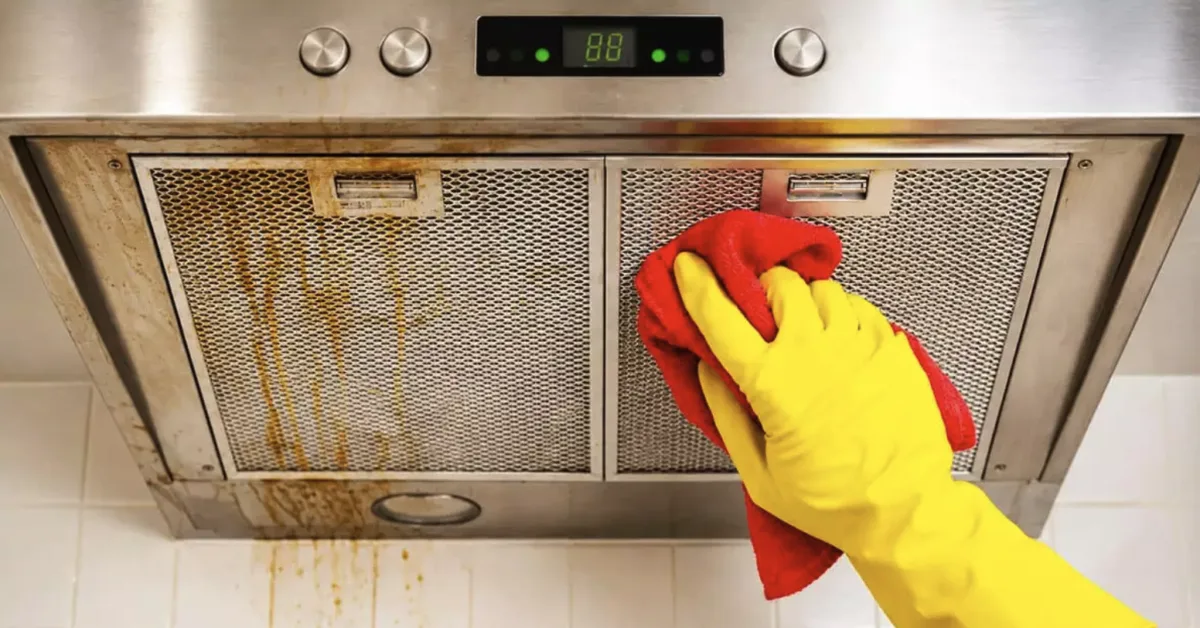
My range hood filter is one of those things I used to completely forget about until it got so gunked up with grease that the fan barely pulled any air. Over time that sticky layer of grease doesn’t just look bad, it actually makes the hood work harder, cuts down the suction, and can start to smell. So now I clean the filter regularly before it ever gets that bad, and I’ve got two easy methods that work every single time. Neither one needs any expensive cleaners.
The first method uses baking soda, and it’s my go-to for a filter that isn’t too far gone.
- about ½ cup baking soda
- water
Fill a large pot or a deep baking pan with enough water to fully submerge the filter, and bring it to a boil. Once it’s boiling, start adding the baking soda a little at a time. Go slow here, because baking soda reacts in boiling water and foams up a lot, so dumping it all in at once makes a mess. Lower the greasy filter into the water and let it simmer for about 5 to 10 minutes. You’ll actually see the old grease start to loosen and lift off. After that, just rinse the filter under warm water and wipe it down with a sponge. If the buildup is really old and has been there for years, you can repeat the whole thing a second time.
The second method uses household ammonia, and it’s the one I save for really stubborn, hardened grease. A word of caution first: ammonia fumes are strong and you should never mix it with anything else, especially bleach. Only do this in a well-ventilated spot.
- ½ to ½ cup (about 2 to 3 oz) household ammonia
- a heavy-duty trash bag that seals tightly
Put the filter in the trash bag, pour in the ammonia, and seal the bag up tightly so the fumes stay inside. Because of that sharp smell, set the bag outside on a balcony, porch, or in a garage overnight. While it sits, the fumes soften even old baked-on grease, and in the morning it wipes right off with warm water and a regular sponge.
To keep the hood from ever getting that bad, I clean the filter about once a month. When you stay on top of it, the grease never has a chance to harden, so the whole job takes just a few minutes and you never need any harsh chemicals.