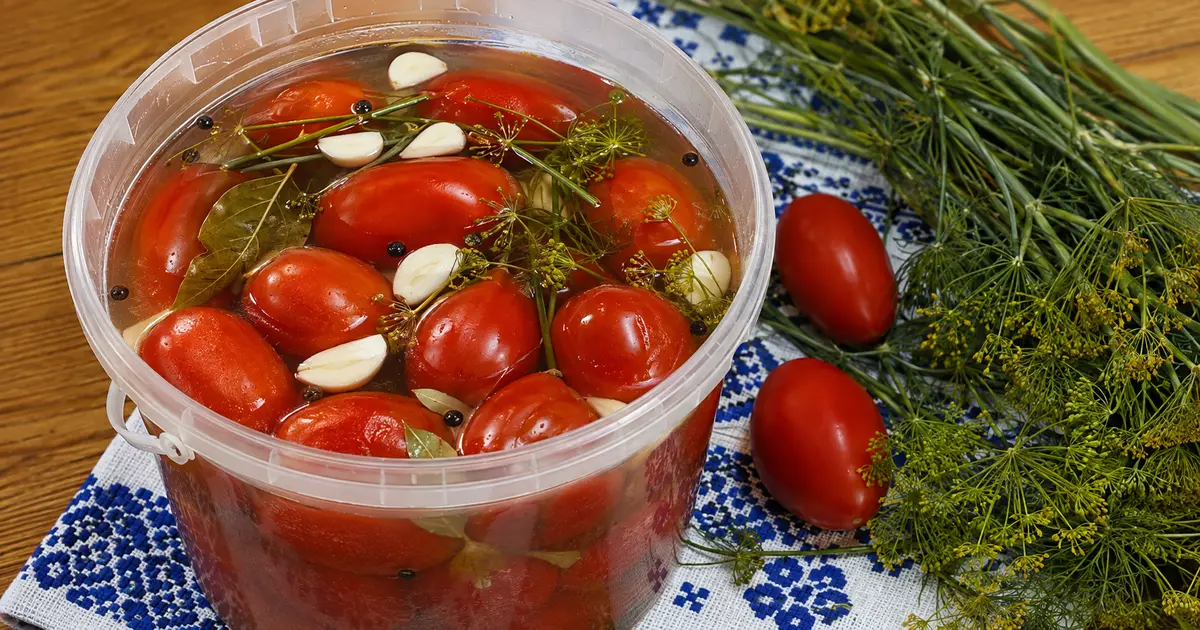
If you’ve never made fermented tomatoes before, you’re in for a treat. These come out tangy, garlicky, a little spicy, and packed with that deep savory flavor you only get from a slow natural ferment. No vinegar, no canning, no boiling jars. Just tomatoes, brine, and time doing its thing on your counter. I like to ferment mine in a food-grade plastic bucket because the wide opening makes it so easy to lift the tomatoes out without squishing them. I add a spoonful of mustard powder to the brine, which gives it a little kick and helps keep things fresh, though I’ll be honest, it’s not a guaranteed mold-preventer, so you still need to keep an eye on your batch.
- firm, meaty tomatoes, as many as fit in your container
- 2 to 3 fresh horseradish leaves (or grape or oak leaves)
- 2 to 3 dill heads (the flowering seed tops)
- 4 to 6 garlic cloves
- 1 to 2 bay leaves
- a small piece of hot pepper
- 5 to 7 black peppercorns
For the brine, per 4 cups of water:
- 4 cups cold clean water
- 2 tablespoons pickling salt (about 1 oz)
- 1 tablespoon sugar
- 1 tablespoon dry mustard powder
Choose ripe but firm tomatoes with no cracks, soft spots, or damage. Rinse them well under running water.
On the bottom of a clean food-grade bucket or crock, lay down some of the horseradish leaves, a dill head, some sliced garlic, a bay leaf, and the small piece of hot pepper. Add your first layer of tomatoes. Tuck in a little more horseradish, dill, and garlic, then fill the container with the rest of the tomatoes.
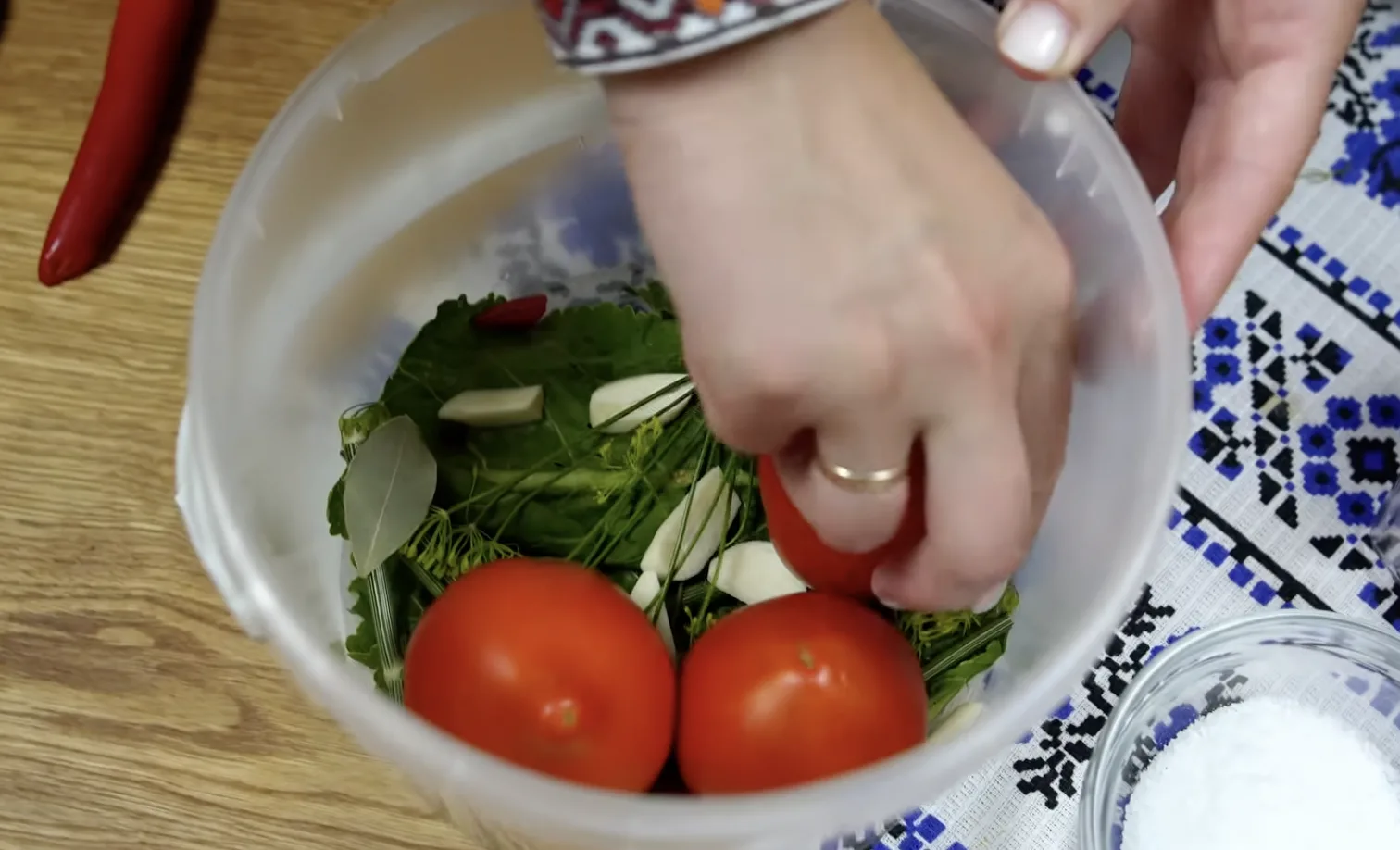
If you want the tomatoes to stay firm and springy, leave them whole and don’t pierce them. For a faster ferment, you can gently poke each one once with a toothpick near the stem end.
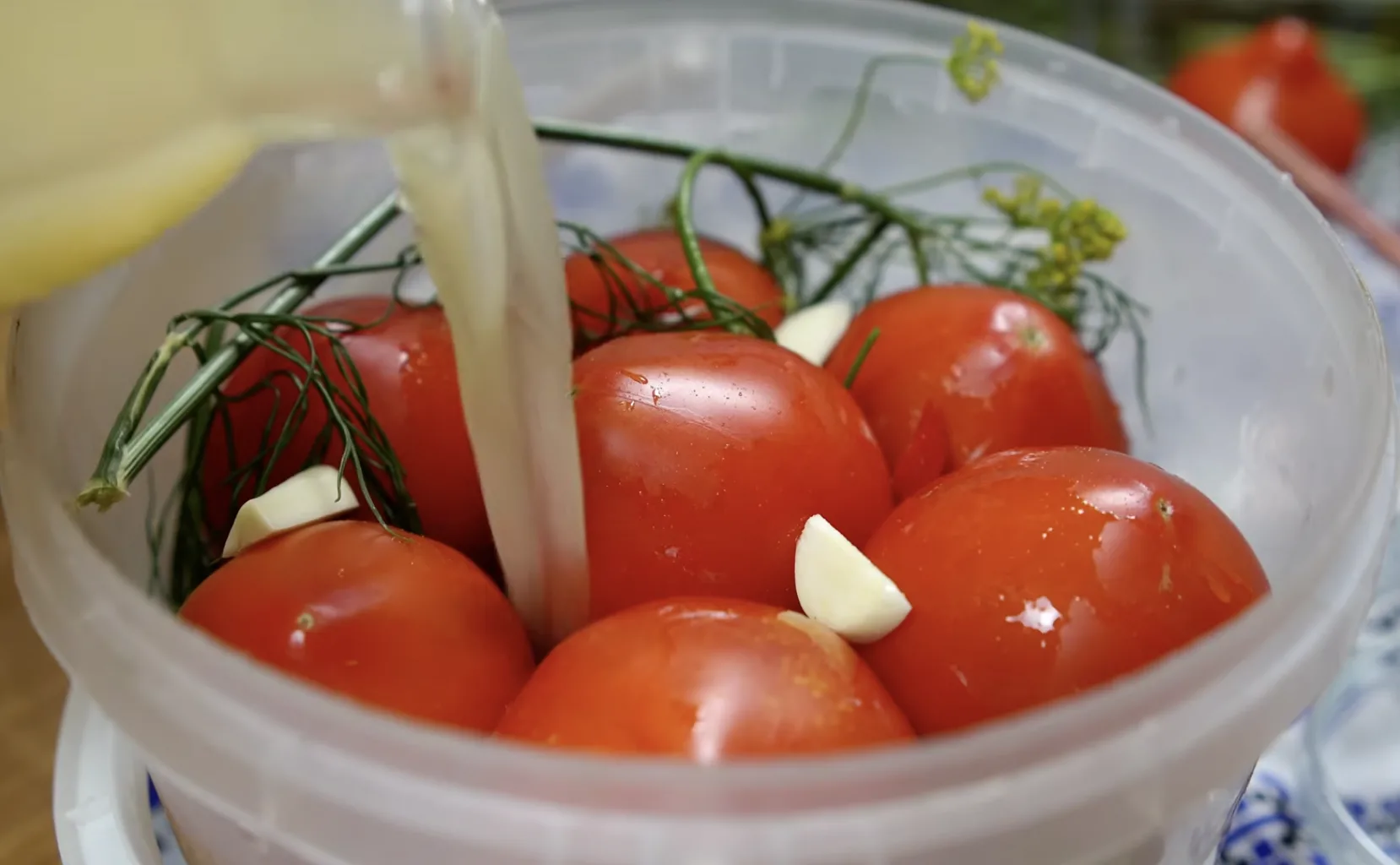
For the brine, stir the salt, sugar, and mustard powder into the cold water until the salt and sugar dissolve. The mustard adds a gentle heat to the brine. Pour the brine over the tomatoes so they’re completely submerged.
Set a clean small plate or a lid slightly smaller than the opening right on top of the tomatoes, and weigh it down with a light weight, like a sealed jar filled with water, to keep everything under the brine. Cover the container loosely so fermentation gases can escape.
Leave it at room temperature and check every day to make sure the tomatoes are staying under the brine. After about 5 to 7 days, start tasting. Larger unpierced tomatoes may take a little longer. Once the flavor is where you want it, move the bucket to the refrigerator to slow the fermentation down.
The tomatoes come out zesty, aromatic, and so appetizing. Serve them with boiled or roasted potatoes and honestly you don’t need anything else.