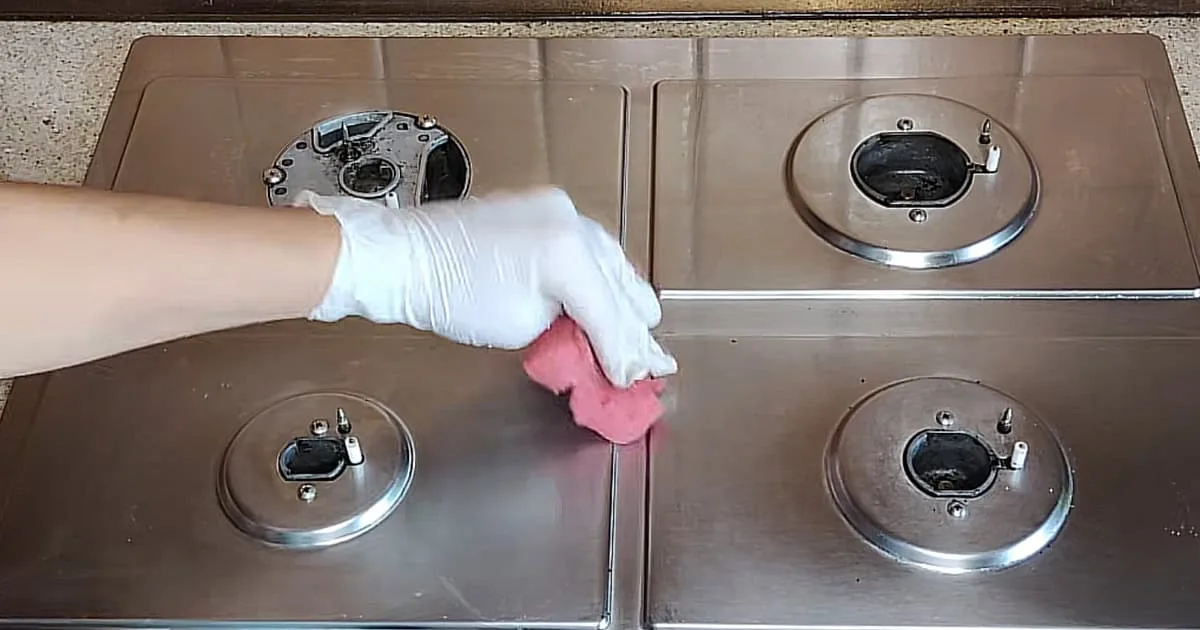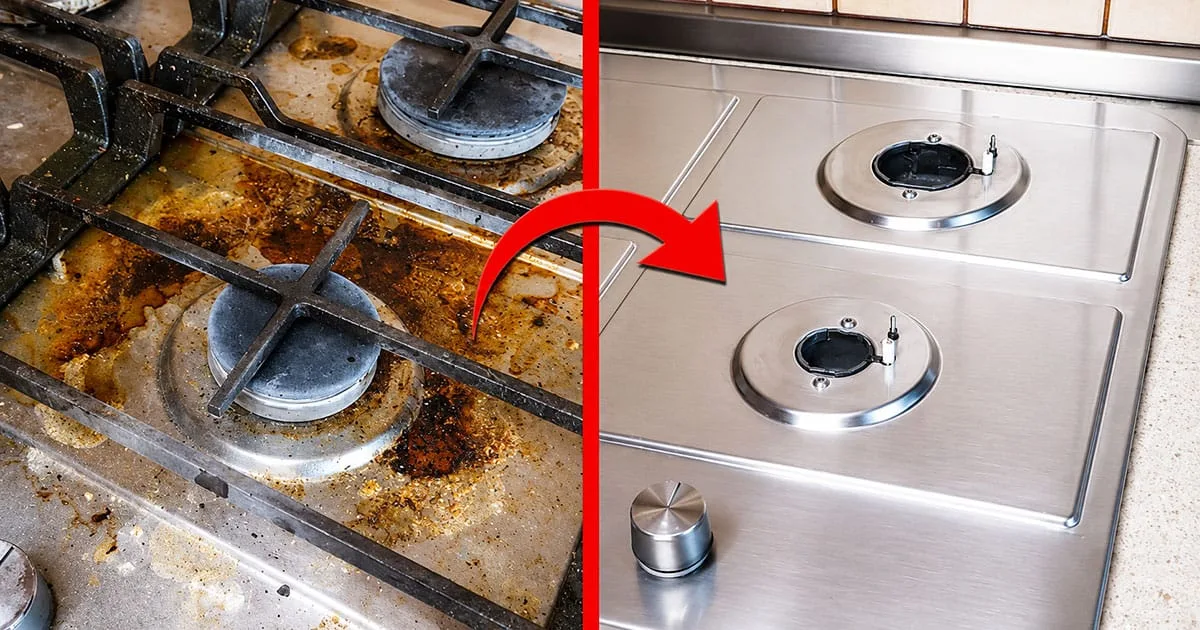
I want to share a really simple method I use to clean grease and burnt-on gunk off my stovetop at home. This works on stainless steel, glass ceramic cooktops, and enamel gas stoves in any color. Even old, stubborn buildup comes off much more easily after this treatment. And the best part is it uses stuff I always have in the kitchen, no expensive cleaners at all.
Here’s what I use:
- baking soda
- white vinegar
- dish soap
- hot water
I start by generously sprinkling baking soda over all the greasy, dirty spots. Then I pour white vinegar over the surface and use a sponge to spread it evenly across the whole stovetop. Because vinegar runs right off the burners, I soak a few paper towels in vinegar and lay them directly over the burners so they stay wet. I leave the whole thing to sit for about an hour so the grease and burnt residue have time to soften up.
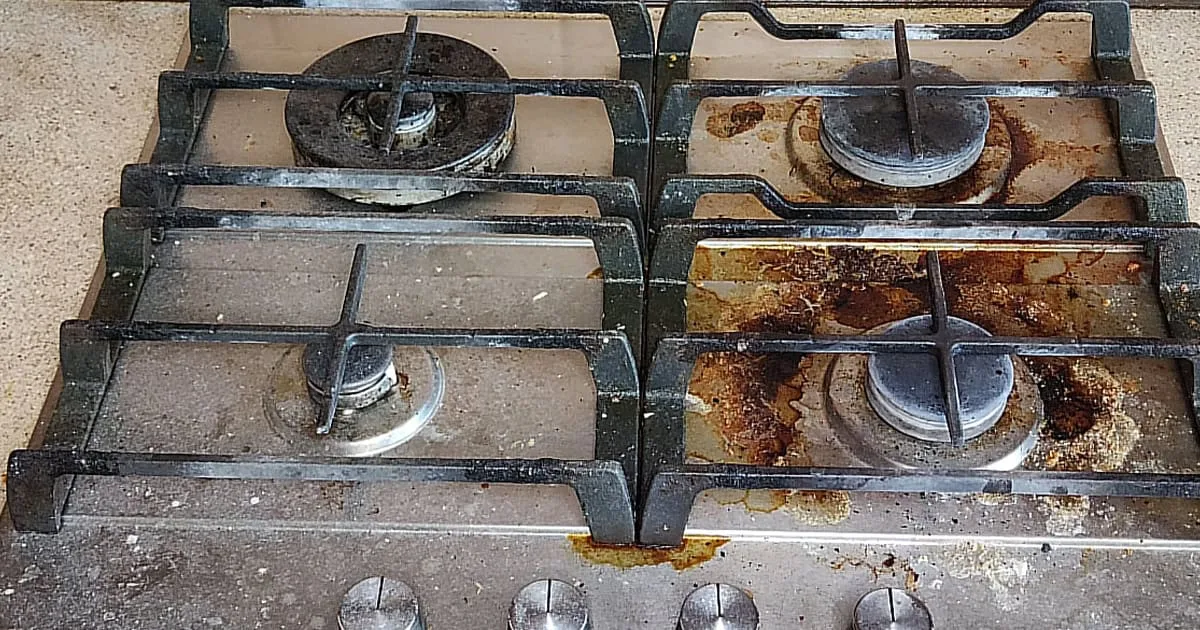
After an hour, I put a little dish soap on a sponge, pull off the paper towels, and dampen the sponge with hot water. Hot water really matters for this method, so don’t skip that part. I start cleaning with the soft side of the sponge, gradually wiping away all the grease, which comes off easily after that long soak. As I go, I rinse the sponge often in hot water to clear off the grease, add a little more dish soap, and keep cleaning.
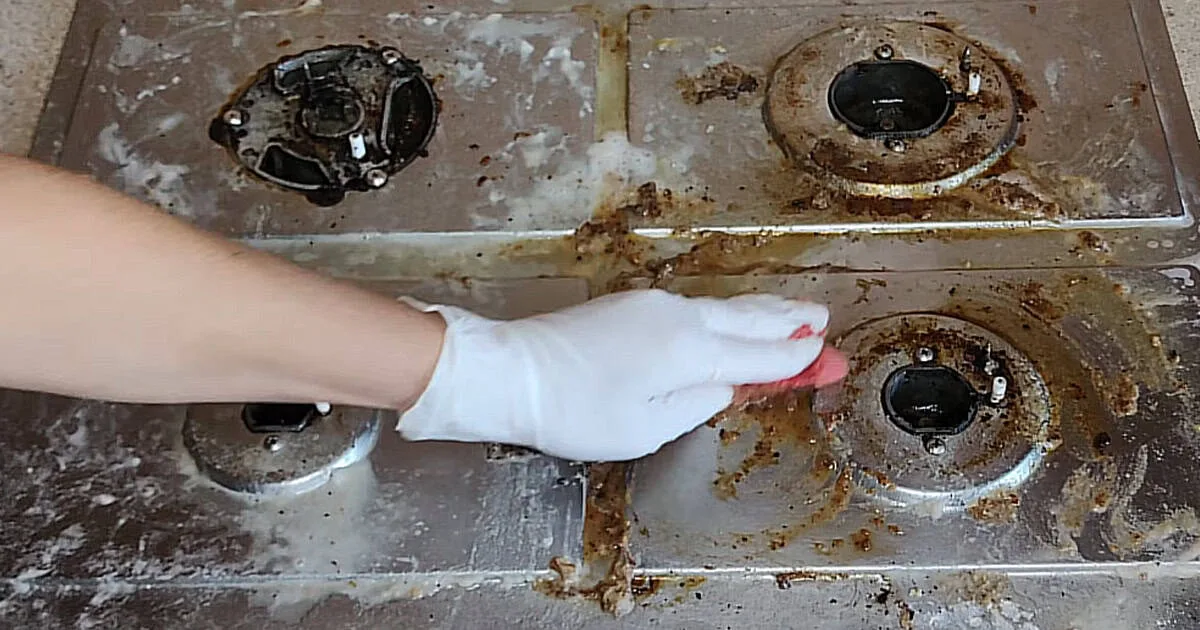
Once most of the grime is gone, I move on to the spots where burnt-on residue is still clinging, especially around the burners. For those I switch to the scrubby side of the sponge. If a burner has heavy baked-on gunk inside it, I carefully scrape it off first with a knife, then finish cleaning it with a well-wrung-out sponge. This handles even the really stubborn spots.
Once the stovetop is completely clean, I wipe it down one more time with a clean damp sponge or cloth to remove any leftover residue, then dry it off with a clean dry towel. The result is a stovetop that’s clean, shiny, and spotless again. This simple method doesn’t need any expensive cleaning products, and it works beautifully even on old, set-in grease and burnt-on buildup.