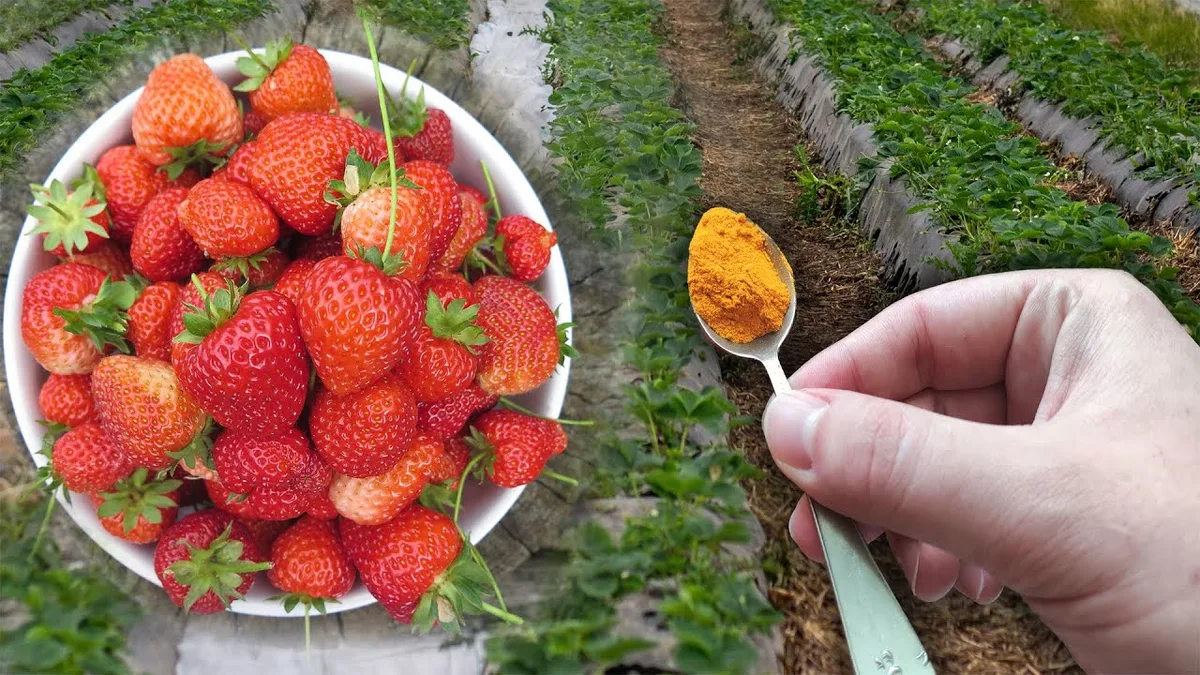
June is honestly the most important month for strawberries. This is when the berries are plumping up, soaking in the sun, and developing that deep sweetness and real strawberry smell that you just can’t fake. For a long time I figured once I got through the spring feeding routine, the plants could handle themselves from there. Big mistake. The years I started giving them a little extra help in June, the difference was almost embarrassing — the berries were noticeably bigger, sweeter, and there were way more of them.
I do three things, spaced out through the month. None of them are complicated or expensive, and I’ve been doing this same routine for years now.
The first thing I do at the very start of June, right when the baby berries are just forming, is a yeast feed. Here’s what you need for it:
- 1 packet active dry yeast (the standard ¼ oz packet)
- 2 tablespoons sugar
- 3 cups warm water
- about 2½ gallons of water to dilute
Dissolve the yeast and sugar in the warm water and let it sit for about an hour until it gets a little foamy on top — that’s how you know it’s active and ready. Pour that mixture into a full watering can or bucket of water, give it a good stir, and water each plant at the base with about 2 cups of the solution. Always soak the bed with plain water first before adding the yeast feed. Dry roots don’t absorb nutrients well, and you’ll just be wasting it.
About 10 to 12 days later I do the second round, which is what I really credit for the sweetness. For this one you need:
- 1 teaspoon monopotassium phosphate (MKP)
- about 2½ gallons of water
You can find monopotassium phosphate at most garden centers or on Amazon — it’s a clean, water-soluble fertilizer that dissolves instantly. Just stir it into the water and apply about 2 cups per plant at the root zone. Potassium is the nutrient most responsible for sugar development, flavor, and that gorgeous deep red color in strawberries. This is the step most home gardeners skip, and it really shows in the berries.
The third thing I do is a foliar spray, and it’s one I learned to never skip. For this you need:
- ½ teaspoon boric acid powder
- a splash of hot water to dissolve it
- about 2½ gallons of warm water
Dissolve the boric acid in a small amount of hot water first, then pour it into your larger container of warm water. Spray the whole plant — leaves, stems, everything — in the evening once the sun is off them. Morning dew plus full sun can magnify and burn wet leaves, so evening is the right time. Boron helps the plant hold onto its blossoms and convert more sugars into the berries themselves, which means better set and sweeter fruit.
Two other things I swear by: I always use warm water for everything. Cold water slows the roots down and they just don’t take up nutrients as well. And I mulch my strawberry beds with straw every year — it keeps the soil moist longer between waterings and keeps the berries up off the ground so they stay clean and don’t rot on the bottom.
Between all three of these, my strawberry patch has never let me down. We eat them fresh off the plant, make jam, freeze bags of them for smoothies all winter — and we still have more than we can get through. That’s the kind of problem I don’t mind having.